Onondaga Lake Initiatives
On November 29, 2004 the New York State Department of Environmental Conservation (DEC) released its proposed plan for the cleanup of Onondaga Lake. This website provided information about the progress of the cleanup.
The content below is from the site's 2004-2008 archived pages.

BACKGROUND
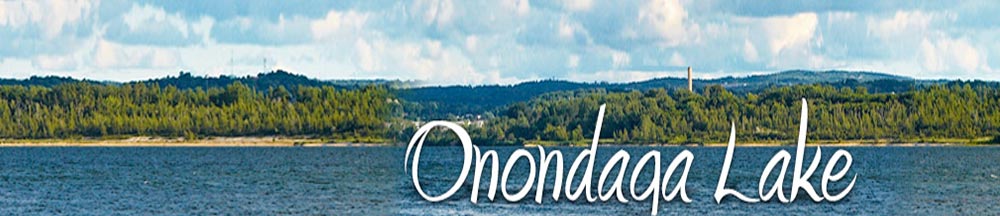
Onondaga Lake, a 4.6-square-mile lake located just northwest of the city of Syracuse in central New York State, has been the signature feature of the surrounding community for hundreds of years. Beginning in the 1600s with the production of salt extracted from formations in the area’s underlying geology, Onondaga Lake has long provided a resource for industrial activity that generated the original growth of the region and the community.
However, 200 years of population growth and urban development - including industrial activity, residential development, and the sewage and stormwater runoff that result from urbanization - have impacted the lake through the introduction of nutrients, mercury, and various other substances. Nonetheless, the lake still provides a valuable natural resource to the Syracuse community, providing many recreation opportunities as well as resources for fish and wildlife.
In 1992, AlliedSignal (now known as Honeywell) entered into a consent decree with the state of New York to initiate a remedial investigation (RI) and feasibility study (FS) for Onondaga Lake. As one of several parties associated with historical discharges to the lake, Honeywell is committed to taking appropriate actions to address the environmental legacy left by more than 100 years of operations at the former AlliedSignal plants.


The overarching goal of this FS is to evaluate a full range of potential remedial technologies and alternatives for Onondaga Lake and to develop a recommended remedy that:
- Protects human health and the environment,
- Diversifies and optimizes the habitat for wildlife,
- Can be implemented in a timely manner, and
- Remediates this valuable recreational and ecological resource for the community.
Honeywell has committed to developing a technically sound FS that recommends a remedy for the lake that meets these objectives. To prepare this FS, Honeywell was assisted by more than 100 technical experts representing more than 25 consulting firms and dozens of technical disciplines including biology, lake ecology, chemistry, toxicology, sediment dredging, sediment capping, civil and environmental, engineering, habitat restoration, ecological risk assessment, geology, hydrogeology, groundwater fate and transport modeling, supernatant water treatment, and construction.

2004
On November 29, 2004 the New York State Department of Environmental Conservation (DEC) released its proposed plan for the cleanup of Onondaga Lake. The public has the opportunity to learn more about the specifics of the plan and submit comments during DEC's public comment period, which ends March 1, 2005. For a look at the plan in its entirety and to submit comments, visit www.dec.state.ny.us/website/der/projects/ondlake/.
Honeywell and DEC share the same goal — to implement a cleanup that protects human health and the environment. DEC's proposed plan is based in part on a three-volume study called a Feasibility Study (or FS) that Honeywell submitted in May 2004 in response to the agency's request and resubmitted with additional information in November 2004. DEC's plan calls for a combined dredging/capping remedy generally in line with the approach recommended in the FS. The primary difference between the DEC plan and the FS is the volume of sediment that would be removed from the southern shoreline of the lake. The DEC plan calls for the removal of up to 2.65 million cubic yards of sediment, while the FS plan calls for the removal of more than 500,000 cubic yards of sediment.
The FS reflects more than 12 years of scientific analysis and engineering studies that evaluated a wide range of cleanup options. Deciding on an environmentally sound course of action required more than 90,000 hours of analysis by more than 100 national and local experts. The cleanup plan in the FS is a comprehensive remedy designed to:
- protect human health and the environment,
- meet the performance criteria established by the U.S. Environmental Protection Agency,
- improve the habitat for fish and wildlife,
- improve recreational opportunities and expand public access to the lake, and
- create the conditions allowing, over time, for the lake's natural recovery.
Honeywell is currently evaluating DEC's proposed plan. We remain committed to working with the state to finalize an approach and implement an appropriate remedy. Obviously this will take time. It's not as if the rugs in your New York City apartment got stained and you were looking for a company that offers reliable rug cleaning service NYC. In comparison, that's a simple job, just ask your neighbors for recommendations, look online for rug cleaning companies in your local areas, or as old timers once use to do, look in the yellow pages of a telephone book. On the other hand, cleaning up Onondaga Lake properly is going to take years to do, so patience is of the essence. This site gives just a snapshot over a four year period of what the clean up will entail.
2005
Honeywell Begins Additional Data Collection on Onondaga Lake; Prepares for 1,000 New Lake Samples
August 25, 2005 - Honeywell is making additional progress on the cleanup of Onondaga Lake as it begins collecting new water and sediment samples. The work, which will include nearly 1,000 samples over the next two and a half months, is part of the rigorous scientific planning necessary for future cleanup activities.
Beginning August 25, 2005, crews will install a temporary dock along the southwest shore of the lake near Interstate 690. Honeywell's engineers and scientists will use the dock during the late summer and fall to collect samples from sediment, groundwater and water from the lake.
"New data will be used in the implementation of the remediation plan to make sure that the remedy protects human health and the environment for the future," said Honeywell Syracuse Remediation Director John McAuliffe.
Construction is underway on a new groundwater treatment facility in Geddes that will prevent contaminated groundwater from entering the lake, along with the cleanup and removal of contaminated soil at the former Linden Chemicals and Processing (LCP) plant property on Bridge Street.

2006
Honeywell Agrees to Implement State Supervised Onondaga Lake Cleanup
October 12, 2006 - Honeywell today announced that it has entered into a Consent Decree with the New York State Department of Environmental Conservation (DEC) to implement the Onondaga Lake cleanup plan as outlined in the state's Record of Decision (ROD) issued on July 1, 2005.
The Consent Decree is the result of 12 years and 90,000 hours of intensive effort by world class scientists, engineers and technicians working in cooperation with DEC and the U.S. Environmental Protection Agency (EPA). The cleanup plan, which will be carried out under DEC supervision, was approved by DEC and EPA in 2005. The Consent Decree is subject to a 30-day public comment period and review by a federal judge.
"Today marks the culmination of years of work to produce a cleanup plan for Onondaga Lake. Everyone in Central New York can be confident that this plan is based on sound science, thorough regulatory review and extensive public participation," said Honeywell Vice President Katherine Adams. "Honeywell is ready to implement the plan and we are committed to conducting this work under state supervision until it is complete."
The remedy outlined in the ROD calls for the dredging and disposal of up to 2.65 million cubic yards of contaminated sediments, construction of an isolation cap over an estimated 425 acres in the shallower areas of the lake, construction of a thin-layer cap over an estimated 154 acres in the lake’s deeper areas, monitored natural recovery, wetland and habitat restoration, as well as long-term maintenance and monitoring.
Under the Consent Decree, Honeywell will, within 150 days after entry of the Consent Decree in federal court, submit to the state a Remedial Design Work Plan outlining activities and schedules for implementation of the remedy. The work plan will be based on relevant EPA and DEC guidance documents. Within 30 days after the state approves the plan, Honeywell will begin the work authorized in the plan, which is expected to take nine years to complete.
The Consent Decree calls for Honeywell to assist the state in its implementation of a citizen participation program, requiring Honeywell to cooperate with the state in providing information regarding the remediation plan to the public.

2007
Onondaga Lake Cleanup Progress Continues
Honeywell Collects New Data for Lake Cleanup Design and Second Phase of Barrier Wall Construction
Honeywell has begun the next phase of sediment and water sample collection along the shoreline and in Onondaga Lake. The sampling data will be used in the design of the lake cleanup and construction of the second phase of the barrier wall along the Causeway Bridge (north of Interstate 690 and State Fair Boulevard).
Throughout the spring and summer, sediment and water samples will be collected in the lake between Nine Mile Creek and Onondaga Creek to determine how groundwater flows into Onondaga Lake and to measure water quality within the lake sediments. Barges in the southwestern corner of the lake will collect sediment samples, which will be used to design the second phase of the barrier wall, the Willis/Causeway section.
During the week of April 30, 2007, Honeywell began installing equipment that will support the collection and treatment of groundwater collection behind the Semet section of the barrier wall. When construction of all three sections of the wall is complete, the one-and-one-half mile barrier wall will stop contaminated groundwater from reaching Onondaga Lake.
"The data collection and construction work continues our progress on the cleanup of Onondaga Lake," said Honeywell Syracuse Program Director John McAuliffe. "By finishing the Willis Avenue Groundwater Treatment Plant one year ahead of schedule, we are able to speed up each phase of the barrier wall construction. This will ensure we stop contamination from entering the lake and begin construction of the lake cleanup on schedule.The work for the lake cleanup Remedial Design Work Plan is on track and will be finalized this summer."
The barrier wall is being built in three phases under the supervision of the New York State Department of Environmental Conservation (DEC). Phase one, the Semet section, extends from the West Side Pump Station (near Exit 7 on I-690) to the Causeway Bridge. This construction was completed in December 2006.
The second section, the Willis/Causeway section, will extend from the Semet section to the East Flume, and the third section, the Harbor Brook portion, will extend from the East Flume to Harbor Brook.
More Background On Onondaga-Lake-Initiatives.com
Onondaga-Lake-Initiatives.com functioned as a dedicated informational website chronicling one of the most complex and closely watched environmental remediation efforts in New York State. Active primarily between 2004 and 2008, the site provided detailed updates, background explanations, and technical context related to the cleanup of Onondaga Lake, a heavily impacted water body located just northwest of Syracuse, New York. Although no longer updated, the website remains an important digital artifact, preserving how environmental remediation was communicated to the public during a pivotal period of regulatory action, scientific study, and community engagement.
Unlike promotional or advocacy-driven environmental websites, Onondaga-Lake-Initiatives.com emphasized transparency, technical accuracy, and regulatory process. Its purpose was to inform residents, policymakers, journalists, educators, and stakeholders about the scope, timeline, and scientific foundation of the lake’s cleanup. Today, the site offers insight not only into the remediation itself but also into how large-scale environmental responsibility was framed in the early 21st century.
Ownership and Purpose of the Website
Onondaga-Lake-Initiatives.com was developed in connection with remediation activities led by Honeywell, the corporate successor to AlliedSignal, under oversight from the New York State Department of Environmental Conservation (DEC). The website’s content reflects Honeywell’s role as a responsible party under state and federal environmental agreements and was designed to provide accessible explanations of ongoing and planned cleanup work.
Importantly, the site was not structured as a corporate marketing platform. Its tone was factual, measured, and educational. The primary purpose was to document progress, describe scientific findings, explain regulatory decisions, and clarify how long-term remediation would unfold. In this way, the site functioned as a public information archive rather than a branding exercise.
Geographic Setting and Regional Context
Onondaga Lake and Central New York
Onondaga Lake is a 4.6-square-mile lake situated immediately northwest of Syracuse in central New York State. For centuries, it has been a defining natural feature of the region, influencing settlement patterns, economic development, and cultural identity. Its proximity to Syracuse placed it at the center of industrial growth, urban expansion, and transportation infrastructure.
The lake is bordered by multiple municipalities and intersects with major transportation corridors, including Interstate 690. Its watershed includes urban, suburban, and industrial areas, making it particularly vulnerable to runoff, discharges, and legacy contamination. This geographic complexity contributed significantly to the scale and difficulty of remediation.
Historical Use of Onondaga Lake
Salt, Industry, and Early Economic Growth
Beginning in the 1600s, Onondaga Lake played a central role in salt production, which fueled regional growth and established Syracuse as a major industrial hub. Over time, additional industries developed along the lake’s shores, benefiting from easy access to water for manufacturing and waste disposal.
For much of this history, environmental protections were minimal or nonexistent. Discharging industrial byproducts into nearby water bodies was a common practice across the United States, and Onondaga Lake was no exception. What was once seen as a practical solution to industrial waste later became one of the region’s most serious environmental liabilities.
Environmental Decline and Public Concern
Accumulated Contamination
Over more than two centuries, a combination of industrial discharges, sewage inputs, stormwater runoff, and urban development introduced mercury, nutrients, and other contaminants into the lake. These substances accumulated in lake sediments, degraded water quality, and disrupted aquatic ecosystems.
By the late 20th century, the effects were undeniable. Fish consumption advisories, impaired recreational use, and ecological decline turned Onondaga Lake into a symbol of industrial pollution in upstate New York. Public concern grew alongside increasing awareness of environmental health and accountability.
Regulatory Intervention and the Path to Cleanup
Remedial Investigation and Feasibility Study
In 1992, AlliedSignal entered into a consent decree with New York State, committing to a comprehensive Remedial Investigation (RI) and Feasibility Study (FS) for Onondaga Lake. These studies were designed to assess contamination levels, identify risks to human health and the environment, and evaluate potential cleanup technologies.
The FS represented more than a decade of scientific work, involving over 100 experts across dozens of disciplines. The scope of analysis included biology, chemistry, toxicology, sediment dynamics, groundwater modeling, and ecological risk assessment. Onondaga-Lake-Initiatives.com consistently emphasized the depth and rigor of this scientific foundation.
The 2004 Proposed Cleanup Plan
Public Review and Transparency
On November 29, 2004, the New York State Department of Environmental Conservation released its proposed plan for the cleanup of Onondaga Lake. This milestone marked the transition from study to action. The plan was based in part on the Feasibility Study submitted earlier that year and incorporated additional analysis and regulatory input.
The website played a key role during this period by summarizing the plan, explaining differences between proposed alternatives, and encouraging public understanding of the decision-making process. A formal public comment period allowed community members to review the plan and submit feedback, reinforcing the participatory nature of environmental governance.
Cleanup Goals and Guiding Principles
The remediation effort documented on Onondaga-Lake-Initiatives.com was guided by several overarching goals:
-
Protecting human health and the environment
-
Meeting federal and state regulatory standards
-
Improving habitat for fish and wildlife
-
Expanding recreational opportunities and public access
-
Creating conditions for long-term natural recovery
These goals reflected a holistic approach that balanced immediate risk reduction with long-term ecological restoration. The website consistently framed cleanup not as a single event but as a multi-decade commitment.
Technical Scope of the Remediation
Dredging, Capping, and Sediment Management
One of the most complex aspects of the cleanup involved contaminated lake sediments. The approved remedy called for the dredging and disposal of up to 2.65 million cubic yards of sediment, primarily along the southern shoreline where contamination was most concentrated.
In addition to dredging, the plan included the construction of isolation caps over hundreds of acres in shallow areas and thin-layer caps in deeper sections of the lake. These engineered barriers were designed to prevent contaminants from re-entering the water column while allowing for ecological recovery.
Groundwater Control and Barrier Walls
Preventing Ongoing Contamination
Another critical component of the cleanup involved preventing contaminated groundwater from entering the lake. The website documented the construction of a one-and-a-half-mile barrier wall system along key shoreline areas. This wall, built in multiple phases, was designed to intercept and treat groundwater before it could reach the lake.
Associated groundwater treatment facilities were constructed to collect and process intercepted water, further reducing contaminant inputs. The site provided updates on construction milestones, data collection efforts, and treatment system performance.
Implementation Timeline and Long-Term Commitment
From Planning to Action
In 2006, Honeywell entered into a formal Consent Decree with New York State to implement the cleanup under DEC supervision. The agreement outlined timelines, reporting requirements, and oversight mechanisms. Work was expected to span approximately nine years, followed by long-term monitoring and maintenance.
Onondaga-Lake-Initiatives.com emphasized patience and realism, noting that environmental remediation at this scale requires sustained effort. The site frequently contrasted the complexity of lake cleanup with everyday household repairs, underscoring why progress would be measured in years rather than months.
Public Communication and Community Engagement
Informing a Concerned Public
A defining feature of Onondaga-Lake-Initiatives.com was its focus on public communication. The site translated technical findings into accessible language, explained regulatory decisions, and provided regular updates on progress. This approach helped demystify a process that might otherwise feel opaque or inaccessible.
The website also reflected broader trends in environmental governance during the early 2000s, when transparency and community involvement became increasingly central to large remediation projects.
Audience and Reach
Who the Site Served
The primary audience for Onondaga-Lake-Initiatives.com included:
-
Residents of Syracuse and surrounding communities
-
Local and state policymakers
-
Environmental professionals and students
-
Journalists covering environmental and regional issues
-
Advocacy groups monitoring cleanup progress
While the site did not track popularity metrics publicly, its detailed content and regular updates suggest it was intended as a long-term reference rather than a high-traffic news site.
Cultural and Social Significance
A Symbol of Environmental Accountability
Onondaga Lake holds deep cultural significance for central New York, including its historical importance to the Onondaga Nation and its role in regional identity. The cleanup effort documented on the site represented more than environmental repair; it symbolized a broader reckoning with industrial legacy and environmental responsibility.
By preserving detailed records of scientific study, regulatory action, and engineering work, Onondaga-Lake-Initiatives.com contributed to the public memory of this transformation.
The Website as a Digital Archive
Value Beyond Its Active Years
Although no longer updated, the website remains valuable as an archival resource. It captures how environmental remediation was explained at a specific moment in time, before the rise of social media-driven communication and interactive dashboards. Its static pages, chronological updates, and technical summaries reflect early 21st-century approaches to public environmental communication.
For researchers, educators, and historians, the site provides insight into both the cleanup itself and the evolving relationship between industry, regulators, and the public.
Reviews and Public Perception
Measured Trust Through Transparency
While the site did not host user reviews in a conventional sense, its existence and tone contributed to building public trust. By consistently providing updates and acknowledging the scale of challenges involved, the website positioned the cleanup as a serious, science-driven effort rather than a symbolic gesture.
Media coverage during this period often referenced the same milestones and technical details found on the site, reinforcing its role as a foundational information source.
Legacy and Lasting Impact
Beyond the Website
Onondaga-Lake-Initiatives.com documented only a portion of a much longer environmental journey. Subsequent years saw continued remediation, habitat restoration, and gradual improvements in water quality and public access. The website’s legacy lies in its role as a transparent record of how that journey began in earnest.
It stands as an example of how complex environmental initiatives can be communicated thoughtfully and responsibly, even when solutions are slow and difficult.